
Category: Automation Workflows
-
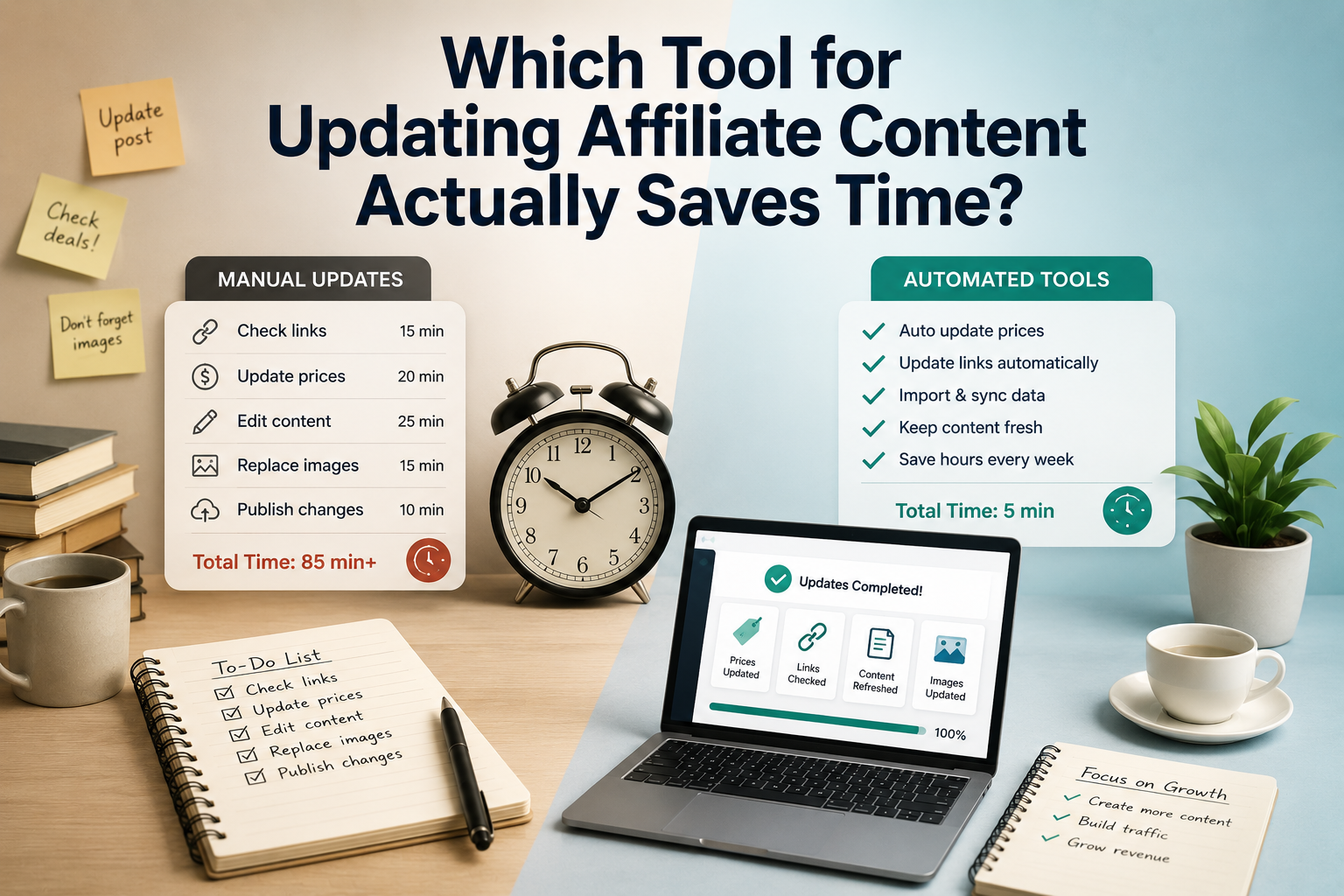
Which Tool for Updating Affiliate Content Actually Saves Time?
A tool only saves time if it removes work across the whole update cycle. That means fewer logins, fewer tabs, fewer copy-paste moves between merchant pages and drafts, and fewer manual layout repairs after prices, links, or product blocks change. The real win is not speed during a demo refresh; it is every week. A…
-

Out-of-Stock Affiliate Links: What to Replace Automatically
Before any automation replaces a link, the target failure needs a label. A product that is briefly unavailable should not be treated like a dead page or a retired SKU. This is also the right moment to , since stale feeds often create unnecessary swaps. No single signal is safe enough on its own. Reliable…
-

Affiliate Content Automation: What to Automate First and Why
Volatile product facts—price, availability, coupon status, shipping windows, and ratings—are usually the smartest first automation target. They change often enough to damage trust and clicks, yet they arrive in predictable formats from feeds, APIs, or merchant exports. That makes them far safer to automate than recommendation copy or opinion-driven comparisons. Why this area produces quick…
-

How to Update Affiliate Posts Faster Without Rewriting Them
Use a three-part test Before touching copy, score the post on intent, structure, and evidence. If all three still mostly hold, the page is a refresh candidate. If two fail, patching usually costs more than rebuilding—especially inside larger . A quick color code keeps decisions fast: Green and most yellow posts deserve a fast refresh.…
-

How Often Should You Update Affiliate Prices and Availability?
Page refresh speed has a hard ceiling: the source data itself. If a merchant feed is rebuilt every six hours, re-importing it every 15 minutes does not produce fresher prices; it only republishes the same snapshot. Before setting cron jobs, it helps to understand . That delay can enter the pipeline at several points: A…
Latest Posts





About the Author

Serge
Serge is an affiliate marketer with 20 years in the field and a WordPress plugin developer. He writes about building, ranking, and monetizing affiliate sites — drawing on tools he’s actually built and used, not just reviewed.
You May Have Missed