
Category: Comparison Formats
-

Google’s Helpful Product Review Requirements That Actually Affect Rankings
It is easy to treat Google’s product-review advice as a separate “Product Reviews update” that a page either passes or fails. That is too neat. Google’s current guidance sits within its broader helpful content approach, alongside signals meant to reward original, people-first information. There is no public checklist that unlocks a ranking boost, no visible…
-

How to Fact-Check AI Product Reviews Before Publishing
A long draft is difficult to verify as a whole. Break it into individual assertions: one feature, price, compatibility claim, test result, or comparison per line. This prevents a polished paragraph from hiding several unsupported details. Use a simple spreadsheet or document table: Claim from draft Type Evidence needed Source checked Rewrite decision “The earbuds…
-

What to Test in a Product Review Before Making a Recommendation
Unboxing and setup reveal costs that a spec sheet cannot: missing adapters, unclear diagrams, account requirements, firmware updates, or a tool that was never mentioned. These details matter most when the product is aimed at casual buyers or is meant to work straight away. Before assembly, record every item in the box and compare it…
-
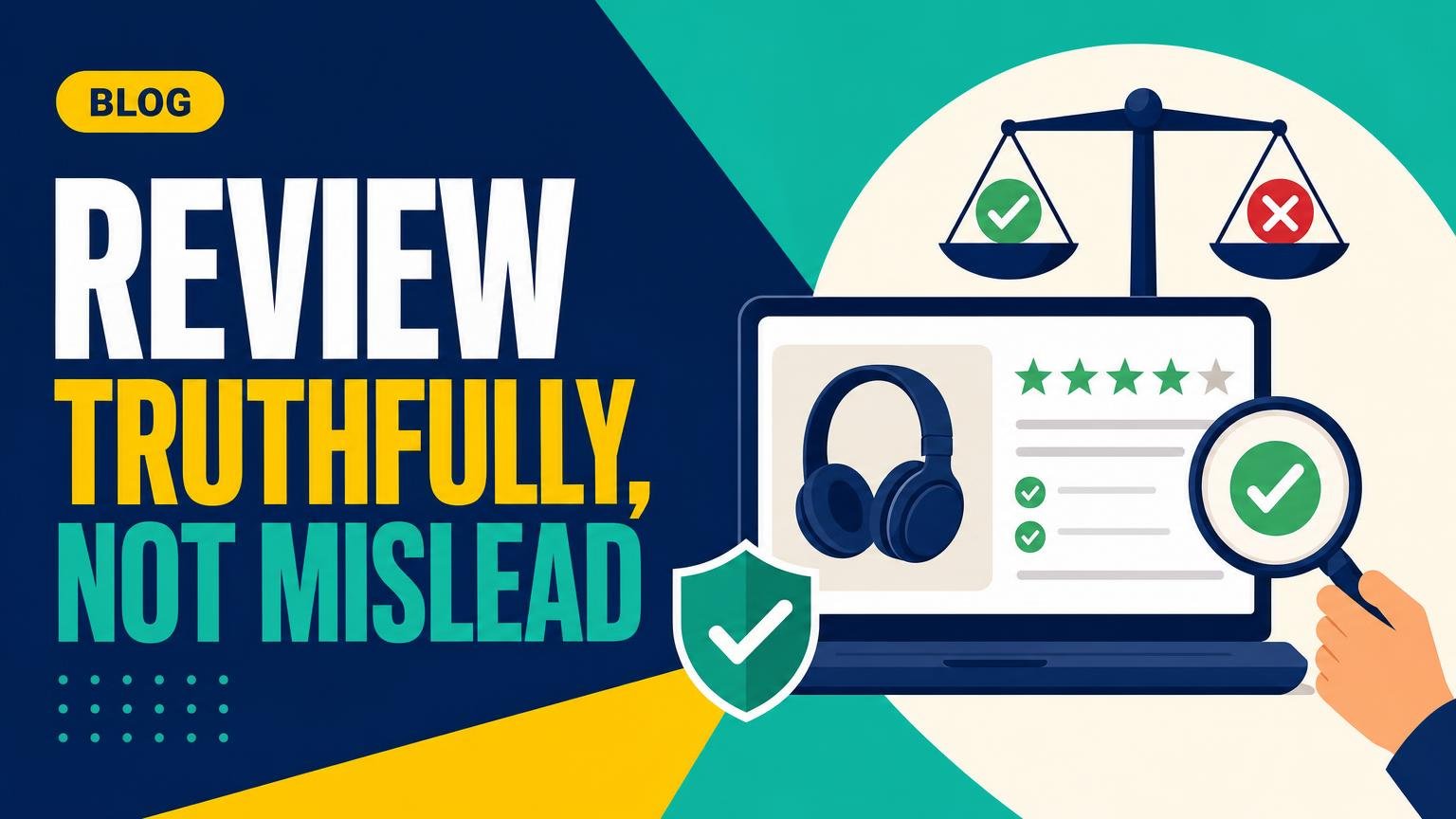
Can Products Be Reviewed Without Misleading Readers?
The plain answer is yes—products can be covered responsibly without being used firsthand. Research can compare specifications, prices, manuals, warranty terms, owner reports, and reputable test results. It becomes misleading only when that desk research is written as though it came from personal use. Labels help readers understand what kind of evidence supports a page:…
-

Why a Best Product Roundup Gets Traffic but No Clicks
A large share of “best” queries looks commercial on the surface but behaves more like research. The searcher often wants a map of the category first: what matters, which models are comparable, what trade-offs exist, and whether the product type even fits the use case. That changes the expected click pattern. Instead of jumping to…
-

Why Affiliate Comparisons Feel Biased and How to Fix It
A comparison can be slanted in two very different ways. One is genuine bias: criteria are chosen to reward the highest-paying option, weak products are excluded, or serious drawbacks are softened. The other is an opacity problem: the conclusion may be defensible, but the path to it stays invisible. When readers cannot see how scores…
-
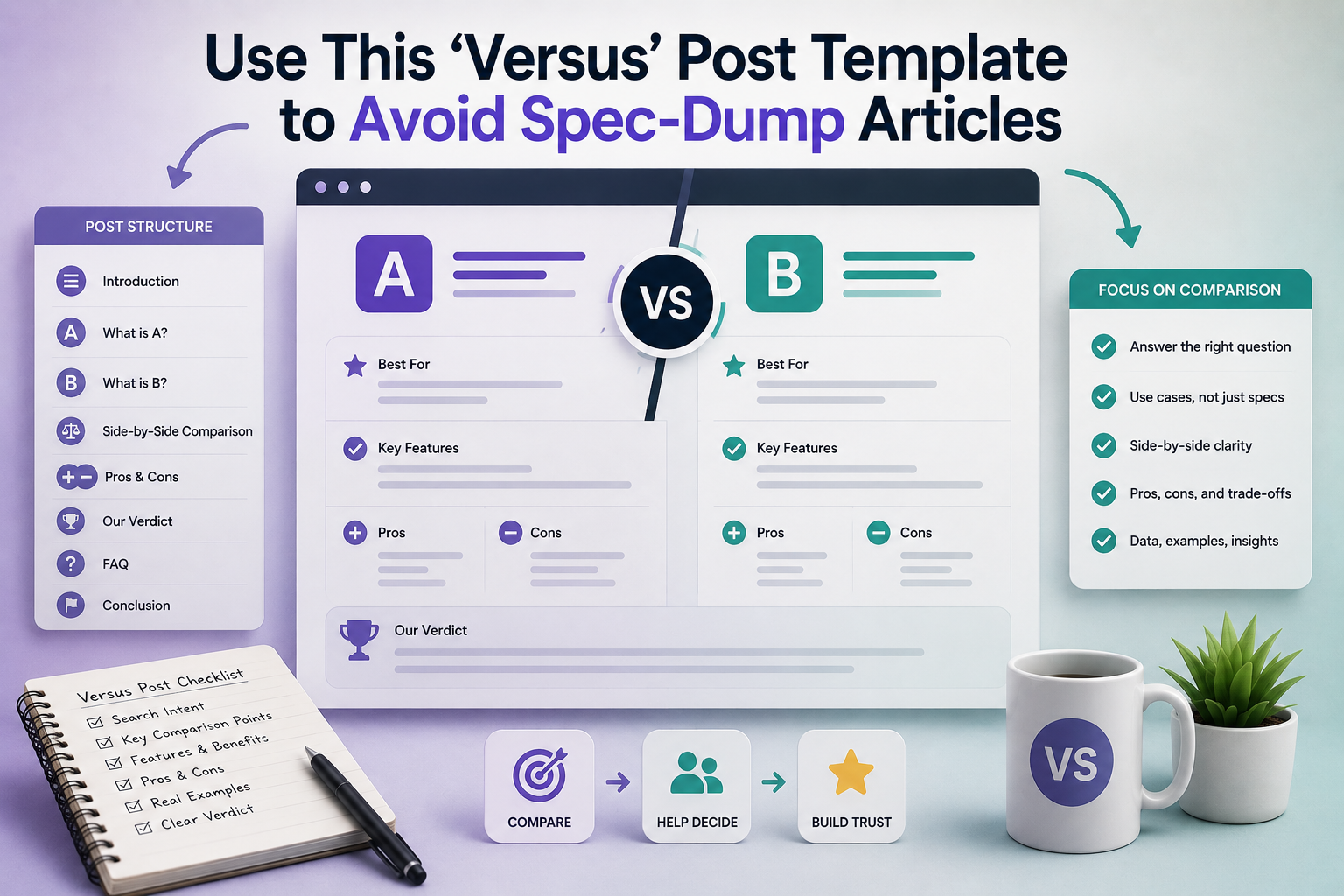
Use This ‘Versus’ Post Template to Avoid Spec-Dump Articles
Spec-dump comparisons confuse coverage with helpfulness. They stack every feature, benchmark, and edge case until both options look equally qualified. The reader leaves with more tabs open, not less certainty. Versus searches are rarely requests for maximum information. They are requests for decision compression: reduce the field, surface the differences that change the outcome, and…
-

How to Write Affiliate Product Reviews Readers Can Trust
A review earns its place when it helps someone choose, not when it repeats a product page. Each meaningful claim should lead back to one of three sources: firsthand use, credible independent research, or clearly attributed reporting from the maker or another source. Separate evidence from judgment A manufacturer may say a backpack is “ultralight.”…
-

Product Comparison Posts That Match Intent and Earn Clicks
Most comparison posts fail before the first paragraph: they compare two brand names simply because both are popular. Buyers rarely think that way. The useful angle is usually a decision tension — price vs capability, simplicity vs control, speed vs extensibility, or all-in-one convenience vs specialist depth. A strong post starts by naming the tradeoff…
-

Roundup Vs. Comparison Post: Which One Fits the Keyword?
A keyword is less a topic than a task signal. The wording usually reveals what the searcher needs the page to do next. The fastest way to confirm that task is the SERP contract: the pattern of pages already ranking. If search results are mostly listicles, search engines are signaling that the market expects exploration.…
Latest Posts





About the Author

Serge
Serge is an affiliate marketer with 20 years in the field and a WordPress plugin developer. He writes about building, ranking, and monetizing affiliate sites — drawing on tools he’s actually built and used, not just reviewed.
You May Have Missed