


A keyword becomes useful only when it can lead to a page someone is ready to act on.
A beginner may start with a promising idea like home coffee gear, then run into “coffee maker”: a huge term dominated by major retailers and established review sites. Swinging to the other extreme—an oddly specific phrase with almost no searches—rarely produces a worthwhile affiliate page either.
The useful middle is a repeatable search for clear buying intent and manageable competition. Phrases such as “best burr grinder for espresso under $200” reveal a problem, a budget, and an imminent comparison. They also suggest a page that can genuinely help: explain the trade-offs, compare suitable models, and link to relevant sellers. The aim is not to chase every keyword tool score; it is to collect topics where a small site can publish a better, more focused answer and plausibly earn a click or commission.
- Modifiers such as best, vs, for, under, and review often indicate commercial research.
- A strong phrase can support a focused page even when its reported search volume is modest.
Choose queries that deserve a page
A keyword becomes an affiliate opportunity when a page can answer the search clearly while helping someone choose a product. Monthly volume is only one signal. A low-volume query such as “best quiet desk fan for bedroom” may be more valuable than a broad query like “desk fans” if the searcher needs a comparison and several suitable products exist.
Match the page to the shape of the search:
- “Best [product] for [use]” suits a curated roundup with selection criteria and a few distinct picks.
- “[Product A] vs [Product B]” suits a side-by-side comparison, ideally after checking meaningful differences in price, size, features, or upkeep.
- “Is [product] worth it?” suits a review that explains who benefits, who should skip it, and realistic drawbacks.
- “[Product] under $X” suits a budget list, provided current products actually fit the limit.
Before pursuing a phrase, apply a simple usefulness test: Could one page make the decision easier without forcing a recommendation? It should be possible to explain the buyer’s need, compare real options, and name trade-offs. If every product is nearly identical, unavailable, or poorly matched to the query, the keyword may attract clicks but does not support a useful revenue page.
Turn an interest into keyword seeds
“Camping” is far too broad to guide a revenue page, but it contains dozens of buying situations. The aim is not to shrink the topic at random; it is to identify the condition that changes what a shopper should buy.
Start with a product category, then add one useful lens:
- Audience: camping sleeping pads for side sleepers
- Constraint: lightweight tents for backpacking
- Budget: best camping stove under $100
- Use case: car camping chairs for bad backs
- Frustration: tents that stay dry in heavy rain
These additions make the search more valuable, not merely longer. A parent packing for a family trip compares different tents from a solo hiker; someone tired of damp gear has a concrete problem and is closer to choosing a solution.
A simple seed-building routine is to list five camping products—tents, sleeping pads, stoves, chairs, and coolers—then give each product one audience, limitation, price point, and complaint. Phrases such as “best,” “for,” “under,” “lightweight,” and “waterproof” help turn those notes into searches worth testing.
What the searcher is trying to do
Informational intent
The searcher wants an answer, a definition, or a how-to. A guide can build trust here, but a product link is rarely the main reason for the visit.
Commercial investigation
The searcher is narrowing choices before buying: comparing models, checking suitability, or looking for the best option in a situation. This is often the strongest fit for a helpful affiliate page.
Transactional intent
The searcher is ready to act, often seeking a retailer, price, deal, or exact product. These terms can convert well, but large stores and brands may be difficult to outrank.
Modifiers
Words such as “best,” “vs,” “review,” “under $100,” and “for beginners” hint at intent. They need checking against the actual results page, not blind trust.
A query like “best hiking boots for wide feet” suggests a shopper comparing options, while “how to break in hiking boots” is mainly informational. Yet “best” does not automatically mean an affiliate opportunity: results may be dominated by major publishers, thin listicles, or a different need than the phrase implies.
Before assigning a page, inspect the results. Product roundups, comparison tables, retailer listings, and detailed reviews support a commercial angle. For a closer look, use this guide to spot commercial-intent clues before publishing.
Useful check: a modifier earns its place only when the search results, available products, and proposed page all match the same decision stage.
Build a wider keyword pool
A seed list is not a shortlist. At this stage, collect phrases quickly—even awkward, highly specific ones—because the wording often reveals a page worth making.
Follow the search trail
Type each seed into Google and note autocomplete suggestions, People also ask questions, related searches, and the words used in product-result filters. Search a few competing affiliate sites for their comparison headings and article categories. Retailer menus, customer reviews, Reddit threads, and hobbyist forums are especially useful for real-world constraints: “for side sleepers,” “under $100,” or “for rainy weekends.”
Keyword tools can expand the list, but they should not be the only source. Export suggestions from a free or paid tool, then keep phrases that sound like something a shopper might genuinely type. A query with no reported volume can still reflect a specific need.
Give every phrase a quick first pass
Add three notes beside each candidate:
- Meaning: Is the product or problem clear?
- Intent: Does the search suggest comparison, selection, or buying?
- Best page: Could it become a review, versus page, roundup, or a helpful guide that recommends products?
Do not reject a phrase just because it is long or oddly worded. “Best compact sleeping pad for cold weather” may be too narrow for a broad roundup, but excellent for a focused comparison section or standalone guide.
-
Clear product connection
The phrase points to a product category or a problem products can solve.
Keep for nowA reader could plausibly compare options.Set asideA purely informational topic with no product path. -
A workable page shape
The wording suggests a useful format rather than merely a word to repeat.
Keep for nowA review, comparison, roundup, or guide fits naturally.Set asideSeveral unrelated intents forced onto one page. -
Specificity
Constraints often expose an overlooked buying situation.
Keep for nowAudience, budget, use case, or feature modifiers.Set asideDiscarding a useful phrase only because it is narrow.


Check the results before committing
A keyword can look ideal in a tool and still lead to the wrong page. Search it in a clean browser window, note the organic results on the first page, and ask what Google appears to reward: product roundups, single-product reviews, retailer category pages, editorial advice, videos, or forums.
Before outlining anything, look at the leading three to five pages. Record their format, their apparent audience, the products they cover, and whether they answer a buying decision or a practical question. A quick review of the actual search results often exposes intent more clearly than a keyword label.
Result types change the strategy. If “best lightweight tent” returns comparison lists, a focused roundup with selection criteria may fit. If “Tent X review” is dominated by hands-on reviews and retailer listings, a broad comparison page is unlikely to satisfy the same searcher. If tutorials outrank affiliate pages for a seemingly commercial phrase, an advice page with a modest product recommendation may be the better route.
Do not judge only domain size. Notice whether smaller specialist sites rank, whether the top pages are old or thin, and whether the current results leave a clear question unanswered.
When the planned page format differs sharply from most top results, revise the angle before writing. A keyword is not a promise of traffic; the live results show the standard a new page must meet.
Judge the page-to-page matchup
A keyword difficulty number can help sort a long list, but it cannot show what a proposed page must actually beat. The more useful question is: does this specific page have a credible place among the pages already ranking?
Open the first page of results and compare the planned article with the ranking set. A small site is not necessarily competing with every large retailer in the niche. It is competing with the usefulness, focus, and trust of the pages that satisfy that exact query.
Look for signs that the results leave a gap:
- Several rankings are broad category pages when the query asks for a narrow use case.
- Old reviews recommend discontinued models or miss newer alternatives.
- Forum threads rank because no clear buying guide exists.
- List articles mention products but do not compare the feature that matters, such as packed size, battery life, or fit.
- Big publishers address a neighboring intent rather than the exact decision.
For example, “best hiking boots” is usually a demanding matchup. “Best hiking boots for wide feet on rocky trails” may show generic roundups, retailer filters, and scattered discussion. A focused guide with fitting notes, terrain trade-offs, and current product options may be more relevant—though it still needs sound research and time to earn visibility.
A strong opportunity is not a low score. It is a visible mismatch between what searchers need and what current pages provide.
Group by decision, not wording
A shortlist becomes a content plan when phrases are grouped around the same buying decision, not simply because they share words. “Best hiking boots for wet trails,” “waterproof hiking boots,” and “boots for muddy walks” can often support one guide: the reader is choosing protective footwear for damp conditions.
By contrast, “best trail runners for hiking” needs its own page. Trail runners answer a different question: whether a lighter, faster, lower-cut shoe is preferable to a boot. Combining both into a single “boots vs. trail runners” list may work only when the search results show that direct comparison is what searchers expect.
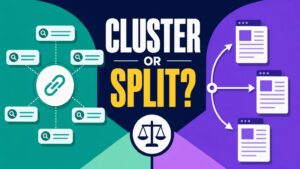
Use a simple clustering and splitting check before assigning a primary phrase to each page:
- Cluster terms when the same products, criteria, and recommendation could satisfy them.
- Split terms when the product type, use case, or expected answer changes.
- Keep one main query per page, then add close variants as supporting sections or natural wording.
This prevents near-duplicate articles while leaving room for genuinely different revenue pages.
Publish a small batch, then let the data narrow the next one
-
Choose five to eight pages
Start with the clearest clusters: a few comparison or “best for” pages plus supporting guides that answer the questions behind them. A short batch is easier to finish and review than a sprawling keyword list.
-
Give every page one job
Match the format to the live results and the decision being made. A page should earn its place because it offers a useful angle, not merely because a tool reported volume.
-
Record a simple baseline
Log the target query, publish date, main products, and intended affiliate link. This makes later changes easier to interpret.
-
Review search performance after time has passed
In Search Console, note impressions, average position, and clicks. High impressions with few clicks may point to a weak title or mismatch; pages with no impressions may need a clearer topic or internal links.
-
Connect traffic to outcomes
Check affiliate dashboard clicks and conversions alongside search data. Rankings alone do not prove that a page helps readers choose or produces revenue.
Keyword tools generate candidates; the search results and reader’s decision determine the page worth publishing.


- Keep a short list of pages to improve before expanding into new topics.
- Treat conversions as feedback on the offer, product fit, and page—not just the keyword.
A useful first batch is small enough to finish and measure. Impressions reveal demand, rankings show visibility, clicks test the result snippet, and conversions test commercial fit.
Tools help uncover possibilities, but a page belongs on the site only when its intent, live results, and product recommendation make sense together.











15 responses to “Affiliate Keyword Research: From Niche Ideas to Revenue Pages”
I’m still a little skeptical of the “competitive opening” idea. If the top results are broad or stale, isn’t that sometimes because the topic just doesn’t make much money? Not every bad search result is an opportunity.
You’re right, and that distinction matters. Weak-looking results are only a clue, not proof of an opportunity. Validate that people are making a real purchase decision, products are available and comparable, and the query has enough commercial value before treating a content gap as worth pursuing.
Also, sometimes the old broad page has a monster backlink profile, so “stale” doesn’t mean easy. Learned that one the annoying way.
Absolutely. The page-to-page matchup includes authority and link strength as well as relevance. A better-focused page can still be worthwhile, but it should be judged realistically rather than assuming poor formatting guarantees an easy win.
I appreciate the warning to check the actual results. I’ve definitely spent too long outlining a “best” post, only to search it afterward and find Google showing mostly manufacturer pages and local stores. Bit backwards 🙃
That is a very common (and frustrating) workflow mistake. A quick SERP check before outlining can save hours: look at the dominant page type, whether independent comparisons rank, and what the top results fail to answer. If the intent is clearly product pages or local availability, an affiliate list may not be the right format.
How low is “low volume” before you stop caring? I keep finding very specific queries that show 0–10 searches in the tools, and it feels hard to justify writing a whole page for them.
A tiny reported volume is not an automatic rejection. Many tools undercount long-tail terms, and one specific phrase can represent a family of close variants. I’d retain it if the query has clear buying intent, suitable products exist, and it can be the primary angle for a page that naturally covers related searches too.
This has been true on my little site. One “zero volume” comparison page gets traffic from about 20 oddly phrased variations, not from the exact keyword I initially saved.
Do you ever create a comparison page when there are only two obvious products? I see lots of “X vs Y” searches, but it seems like a very narrow page compared with a roundup.
When you say a query has to “deserve a page,” does that mean every page needs to target one exact keyword? I’m worried I’ll end up making a bunch of thin pages that are basically the same comparison with slightly different adjectives.
No—one page should target one underlying decision, not one exact string of words. A strong page can rank for many close variants when they share the same products, buyer questions, and evaluation criteria. If changing the adjective does not materially change the recommendation, it probably belongs on the existing page rather than becoming a new one.
The “same products and same criteria” test is the useful part for me. I was splitting pages for “lightweight” and “compact,” but in my category they lead to the exact same shortlist.
This was a good reminder that “best” is not magic affiliate dust. I’ve been collecting keywords with best/top/review in them without checking whether the results are actually comparison content. Going back to clean up my spreadsheet now.
The seed-building examples around audience + constraint were useful. “Camping gear” is way too huge, but “sleeping pad for side sleepers under $100” suddenly gives me an actual research direction.