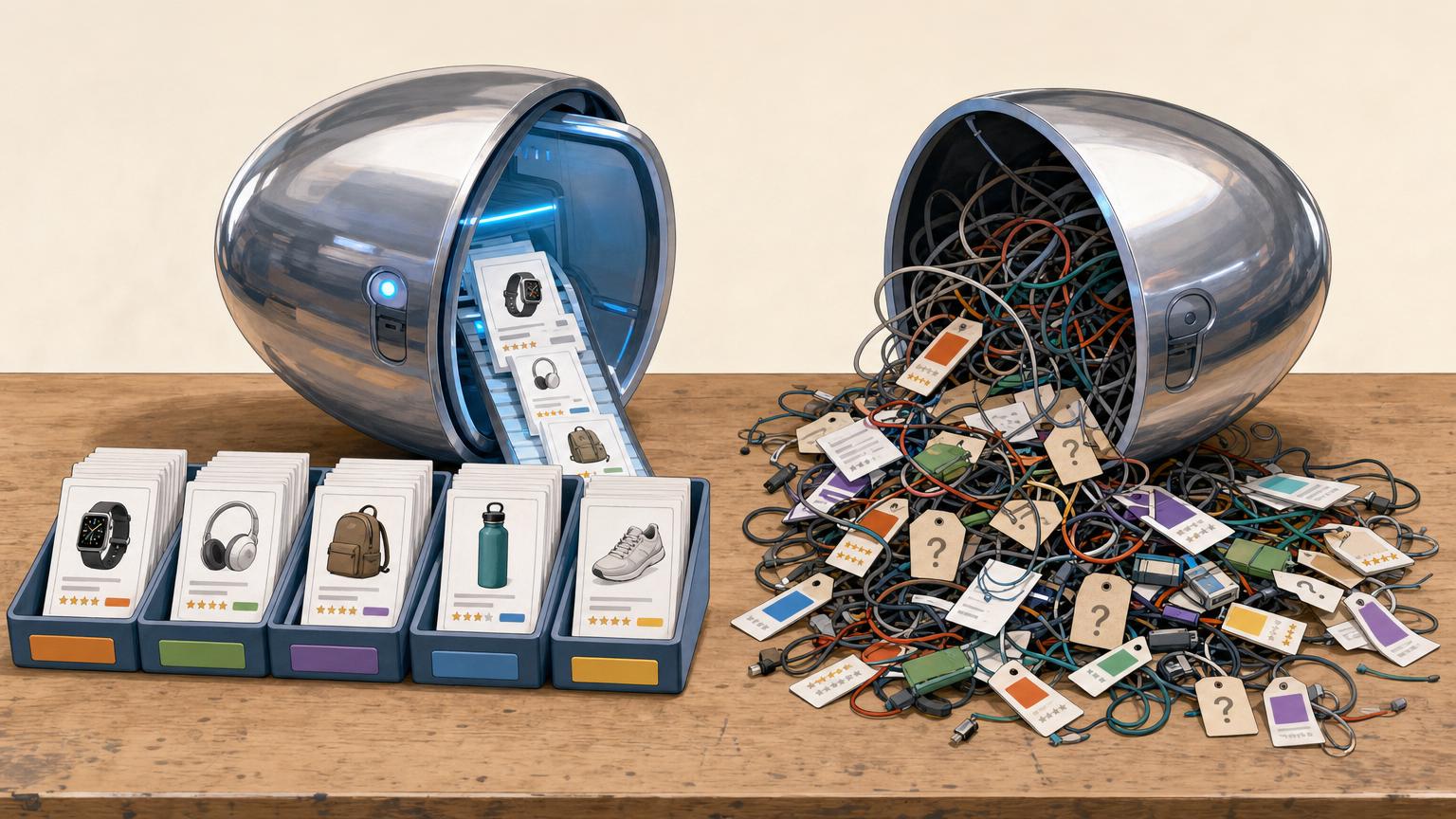


A quick commission can disappear; a credible recommendation keeps working.
A new publisher may have a product link ready, a launch deadline looming, and barely more than a manufacturer’s description to work from. That is exactly when a review can slide into vague superlatives: “great quality,” “perfect for everyone,” “best value.” Readers recognise that language because they have seen it copied across dozens of pages.
The lasting asset is trust, not a one-off click. A useful review separates what was actually checked from what comes from the brand, names the product’s limits, and makes the affiliate relationship plain. It may mean recommending a cheaper alternative—or saying the item suits only a narrow kind of buyer. Those details can reduce short-term conversions, but they give readers a reason to return when the next recommendation matters.
- State clearly when a product was not personally tested.
- Disclose affiliate links near the recommendation, not buried in a footer.
- Treat brand specifications as claims to verify, not review evidence.
Make every recommendation traceable
A review earns its place when it helps someone choose, not when it repeats a product page. Each meaningful claim should lead back to one of three sources: firsthand use, credible independent research, or clearly attributed reporting from the maker or another source.
Separate evidence from judgment
A manufacturer may say a backpack is “ultralight.” That is a product claim. A reviewer can report its listed weight, compare it with similar packs, and explain whether the weight felt worthwhile after a day hike. The final recommendation is a judgment—but readers can see the evidence beneath it.
Keep these distinctions visible:
- Tested: “The zipper snagged twice during several packing attempts.”
- Researched: “Multiple long-term owner reports mention wear near the strap seam.”
- Brand-stated: “The company rates the bag as water-resistant, not waterproof.”
- Judgment: “It suits occasional travel better than rough outdoor use.”
Descriptions list features. Sales copy promises benefits. A decision-support review explains who benefits, who may not, and why. When direct testing is limited, the review should narrow its conclusions rather than borrow certainty from the manufacturer.
Match the claim to the evidence
A hands-on review can describe what was actually used: setup, comfort after a few sessions, obvious strengths, and problems encountered. It should not quietly turn a weekend trial into a verdict on long-term durability.
A research-based review can still be useful when it gathers specifications, manuals, reputable testing, and recurring owner feedback. The page should say so near the recommendation, including what was not verified firsthand. For a practical guide to covering products that were not personally used, clear sourcing matters more than confident-sounding prose.
“Best for” claims need an even tighter basis. Rather than calling one item the best overall, connect it to a defined need and evidence: “a strong option for small desks because its footprint is compact,” or “better suited to beginners based on its simple controls.”
Useful scope labels include:
- Tested for two weeks
- Research-based comparison
- Based on manufacturer specifications and owner reports
- Not assessed for long-term reliability
These limits do not weaken a review. They show readers exactly how much weight to give it.
Run one small test from start to finish
-
Name the buyer question
Start with a question a shopper would actually ask: Can it handle a weekly task, fit a small space, or save time? The test should answer one claim, not prove that the product is “great.”
-
Write down the starting conditions
Record the model, price checked, settings, materials used, room or weather conditions, and how much experience the tester has. A practical list of things worth checking before recommending helps keep this record focused.
-
Repeat a normal task
Use the product for one realistic job from setup through cleanup or storage. Time the task when speed matters, and repeat it if the first run seems unusual.
-
Capture what happened, including the awkward parts
Note specific observations: a loose lid after three uses, a confusing setting, a 12-minute charge, or residue left after washing. Photos, screenshots, and short clips can preserve details that memory smooths over.
-
Translate the result into buyer fit
State who benefits and who may not. A compact tool that works well for occasional use may be frustrating for someone using it every day.
Keep the same note template for every product. Comparable records make later recommendations more reliable.
Do not hide a problem because the product still seems worthwhile. Describe when it happened, what conditions caused it, and whether a typical buyer can avoid it.
“Stopped working” is vague. “The latch opened when the container was filled past the marked line” gives readers a limit they can act on.
Turn features into buying advice
A specification is only the starting point. “1.2 kg,” “40-hour battery,” or “IPX7 rated” becomes helpful when the review explains the consequence: lighter gear is easier to carry all day, long battery life reduces charging on a weekend trip, and water resistance may survive rain but not necessarily saltwater or drops.
Write verdicts for different people
Every final recommendation should answer four questions:
- Who suits it? Name a situation, not a vague “most people.” For example, a compact tripod may suit hikers who prioritize a light bag.
- Who should skip it? The same tripod may frustrate photographers using heavy lenses or shooting in wind.
- What is traded away? Low weight may mean less stability; a low price may mean fewer controls or weaker support.
- When does another option win? State the condition that changes the call: a heavier tripod is the better buy when stable long-exposure work matters more than portability.
This keeps a verdict from becoming a blanket approval. A short, honest conclusion might read: “A good fit for casual travel and phone photography, but not for heavy camera setups. Its small size is convenient, though stability suffers in wind; choose a larger model for night shots or telephoto lenses.”
Specific consequences also prevent feature lists from sounding like evidence. A fast charging claim matters only if charging time was tested or clearly attributed to the manufacturer.
Use a review flow readers can scan
A trustworthy review should answer a reader’s questions in the order they arise. Open with a short verdict: what the product does well, its biggest compromise, and the type of buyer most likely to be satisfied. Then show the basis for that judgment before moving into smaller details.
A practical sequence is available in this review structure for real buying decisions. It keeps the essential information from being buried beneath specifications or promotional language.
Keep each judgment accountable
For every major advantage or drawback, add a concrete example. Instead of calling a backpack “comfortable,” note whether it remained comfortable during a two-hour walk and with roughly how much weight. Instead of saying an app is “easy to use,” identify the task that was quick and the setting that caused confusion.
A useful review flow usually includes:
- Verdict and audience fit near the start
- Evidence from use or research beside the relevant claim
- Comparison context, such as a cheaper alternative or a competing feature
- Limitations and deal-breakers before the final recommendation
End with a candid “not for” statement. A compact travel tripod may suit hikers but not someone filming in windy conditions. Naming that mismatch makes the positive recommendation more believable.
Keep outside evidence honest
Treat outside information as a snapshot
Customer feedback can reveal patterns that a short test misses, but it is not a verdict. When drawing fairly from Amazon customer feedback, note the product version, review date, and the pattern observed. Several reports of a loose hinge or confusing setup may justify mentioning a recurring complaint; they do not prove that every unit will fail.
Include both sides of a pattern. If many buyers praise battery life while a smaller, consistent group reports charging trouble, say so. Avoid turning a handful of dramatic anecdotes into failure rates, safety claims, or durability guarantees.
Prices, specifications, and availability need equally careful wording:
- Attribute dimensions, compatibility, and included accessories to the manufacturer manual or official listing.
- Date-stamp prices and name the retailer, currency, and any sale condition. Shipping and taxes can change the real total.
- Describe stock narrowly: “available from Retailer A when checked on 12 May,” rather than “easy to buy.” Variants and regions often differ.
If sources conflict, report the conflict or leave the claim out. A brief source note lets readers see what was checked and when.
Use “buyers commonly mention” for feedback and “the manufacturer lists” for specifications. Reserve stronger language for evidence that actually supports it.
Let disclosure prove independence
An affiliate disclosure works best beside the first product link or near the verdict—not hidden in a footer. Plain language is enough: “This review contains affiliate links. A commission may be earned at no extra cost to the buyer.”
The review should then give readers evidence that the commission did not choose the conclusion. Name the frustrating parts, explain where a cheaper or competing product is stronger, and state who should skip the item. For example, a compact blender may suit occasional smoothies but be a poor pick for daily frozen-drink use if the motor struggles with ice.
Editorial independence becomes visible through choices on the page:
- Include drawbacks before the link-heavy buying section.
- Compare at least one realistic alternative on price, performance, or fit.
- Keep affiliate links out of claims that have not been verified.
- Update or remove a recommendation when price, quality, or availability changes.
A disclosure earns more trust when it is paired with specific reasons not to buy.
A clear “skip this if…” line is often more persuasive than extra praise. It shows that the review serves a buyer decision, not only a sale.
Give the review one final evidence check
-
Mark each claim by source
Label statements as tested, researched, or manufacturer-provided. Delete anything whose source cannot be found.
-
Recheck details that change
Confirm price, availability, model number, specifications, and warranty terms on the publication date. Link or date any retailer and brand information.
-
Audit AI-generated wording
Treat AI text as an unverified draft, not evidence. Use this guide to fact-check AI product review drafts before retaining a claim.
-
Replace inflated language
Remove “best,” “perfect,” and “game-changing” unless the review supplies a clear comparison and evidence. Specific limits are more credible.
-
Read the verdict against the proof
The recommendation should reflect the testing, cited research, and stated drawbacks. For search-facing expectations, review the product-review signals that affect helpfulness.
A short final check prevents a polished draft from making promises the evidence cannot support.




- Keep notes, sources, and test conditions long enough to revisit a verdict.
- Update or soften claims when pricing, specifications, or availability changes.
- State uncertainty plainly rather than filling gaps with confident-sounding prose.
A reliable affiliate review does not need grand claims. Each major recommendation should point back to a test, a current source, or a clearly attributed statement—and explain the practical conclusion in ordinary language.
That discipline becomes recognizable over time. Readers learn that drawbacks will not be buried, evidence will not be stretched, and a changed fact will be corrected. An editorial standards course can help formalize the habit, but the essential rule is simple: publish only what can be explained and checked.











29 responses to “How to Write Affiliate Product Reviews Readers Can Trust”
Maybe I’m being harsh, but “independent research” is vague. A lot of blogs just cite three other blogs that copied the press release. I’d rather see primary sources, standards, or actual test methodology than a pile of roundups.
For “best for” claims, would you recommend making a little comparison table? I’m writing about budget webcams and want to say one is best for video calls, but another is better if someone needs decent low-light performance.
A comparison table can work very well when each row is tied to evidence. Include the buyer need, the relevant tested result or documented specification, the trade-off, and the date for volatile details like price. Your wording could be: “Best for basic video calls if you prioritize price; choose the alternative if low-light performance matters more.”
I’m slightly skeptical about using customer reviews as evidence. Retailer reviews can be manipulated, and the loudest people are either furious or thrilled. Is there a sensible way to mention patterns without acting like 200 five-star reviews prove anything?
Yes: treat them as anecdotes and look for repeated, specific observations rather than an average star rating alone. Note the retailer, approximate review count, date checked, and limitations such as unverified purchasers or possible selection bias. For example, you can say that multiple recent owners mentioned difficult setup, not that the product is definitively difficult for everyone.
Also sort by newest first. A bunch of old reviews may describe a previous version, which has burned me more than once.
The price/date point is important. I see “best under $100” posts sitting unchanged for months, then every item is $129 or discontinued. That kind of thing makes the whole page feel abandoned.
This is a really practical checklist. The “evidence separate from judgment” rule feels obvious once you read it, but I’ve definitely written sentences that mash both together without noticing.
Could an AI draft still be acceptable if I fact-check it afterward? I use AI mostly to organize notes, but I worry readers will assume every sentence was personally tested if the writing sounds too confident.
I’m new to affiliate content and only own a few of the products I want to cover. Is a research-based review still ethical, or should I just not publish until I can buy everything?
A research-based review can be useful and ethical if it is labeled honestly. Explain that you have not used the product, cite the sources behind key points, avoid sensory or performance claims you cannot verify, and frame the piece as a research-based buying guide rather than a hands-on review.
Really enjoyed the reminder to record failures. I used to leave out weird setup problems because I thought it made my review look messy, but those are often exactly what a buyer needs to know. The product isn’t always bad; sometimes the instructions are just written by a committee of robots lol.
How specific does an affiliate disclosure need to be? Is “This post may contain affiliate links” enough, or should it say that I earn a commission if someone buys?
Plain language is best. “I may earn a commission if you buy through links in this article, at no extra cost to you” tells readers what the relationship is. Put it where readers will see it before or near the recommendation links, rather than hiding it in a footer.
I like the idea of naming poor-fit buyers. Honestly, it makes a recommendation feel much more believable when the writer says who should NOT buy it.
Do you put that near the top with the verdict, or farther down after the pros and cons?
What counts as a “small test” for something like a desk chair? I can test assembly and sit in it for a week, but I can’t realistically test durability for two years. Seems like review advice sometimes pretends every blogger has a lab and a warehouse full of chairs 😅
That is exactly the right limitation to state. For a chair, a small test could cover assembly time, adjustability, comfort during defined work sessions, stability, noise, and any issues observed over a week or month. It cannot prove long-term durability, so treat warranty terms, material details, and a carefully dated sample of owner reports as separate evidence rather than a durability verdict.
This is why I appreciate reviews that say “early impressions.” A chair can feel amazing on day three and awful by week six.
No matter how polished the draft sounds, the standard should be the same: every factual statement needs a source, attribution, or your recorded test. AI can help structure material, but it should not invent test results, fill gaps with assumptions, or convert a brand claim into a conclusion.
A final evidence check is especially useful here: highlight each performance claim and ask, “What specifically supports this?”
This is the part I wish more sites followed. So many “reviews” read like the writer held the product for 10 minutes… if that.
Agreed. A short hands-on session can still be valuable, but its scope needs to be stated. “I tested setup and basic use for an afternoon” is much more trustworthy than implying it establishes long-term reliability.
And it’s fine to say “I don’t know” on battery life or durability. That actually makes me trust the rest more.
The distinction between a tested claim and a brand claim is the bit I needed. If a manufacturer says a blender has a “quiet motor,” can I repeat that in the specs section as long as I say it comes from the manufacturer?
Yes. Attribute it clearly: “The manufacturer describes the motor as quiet.” Avoid turning it into your own conclusion unless you have tested it or have solid independent evidence. If noise matters to buyers, include the test conditions or say that you did not independently verify the claim.
When you say repeatable tasks, do they have to be identical every time? For example, if I’m comparing cordless vacuums, my apartment floor is never going to have exactly the same crumbs/dog hair situation.
They do not need to be perfectly identical, but they should be controlled enough to make the comparison meaningful. You might use the same floor area, the same measured amount and type of debris, the same power setting, and a recorded number of passes. Then disclose what was controlled and what was not.
The scan-friendly flow makes sense, although I hate when a verdict appears before any proof. It can feel like the affiliate link was decided first and the review was written afterward. Maybe a short verdict up top with links to the evidence sections is the compromise?
I have a question about samples sent by brands. If they send me a product for free but don’t pay me, do I need to disclose that separately from affiliate links?
Yes, disclose both relationships. A free sample can affect how readers evaluate your independence even if no payment was made. A simple note such as “The brand provided a sample; affiliate links may earn me a commission; these did not affect the assessment” is clearer than leaving readers to guess.