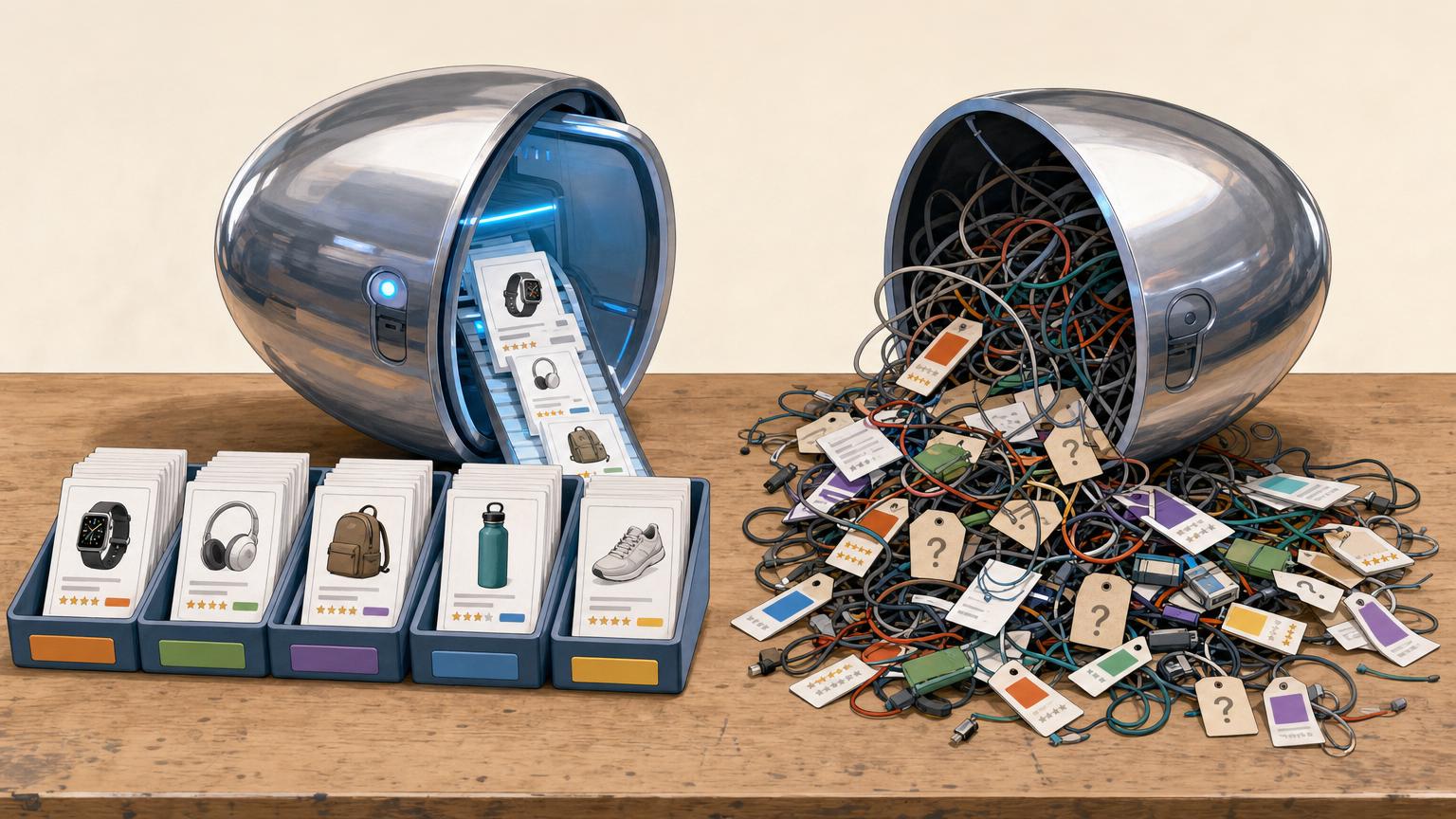


A promising first impression is not yet a recommendation.
A box can arrive looking polished, feel impressive for ten minutes, and still disappoint where buyers actually live: on a crowded desk, after a week of use, or when one small feature fails. That gap is where a reviewer earns trust.
Testing turns broad claims—durable, easy to use, great value—into observations that matter. Does the finish mark easily? Does setup need a manual? Does the battery last through an ordinary day, or only under ideal conditions? A hobbyist review need not imitate a laboratory, but it should describe what was tried, under what conditions, and what happened. Recommendation follows evidence, not excitement, a brand’s spec sheet, or a single smooth first use.
- Note the test conditions, including time used, settings, and any accessories.
- Separate a repeatable flaw from a one-off inconvenience before judging the product.
Test the Claims That Change the Buying Decision
-
The job it must do
Start with the real task: keeping a small desk tidy, making coffee before work, carrying gear on a commute, or replacing an unreliable tool. Test the conditions that make that task difficult, not merely the product’s most flattering use.
Look forPerformance on the buyer’s ordinary, demanding use case.AvoidA verdict based on a quick, ideal-condition trial. -
The deal-breaking limitation
One shortcoming can outweigh several appealing features: awkward fit, poor battery life, excessive noise, limited compatibility, or cleanup that becomes a chore. Identify whether that weakness is tolerable for the intended owner.
Look forLimits that would cause a buyer to stop using it.AvoidTreating every flaw as equally minor. -
Value against realistic alternatives
Compare the product with the nearest cheaper option, the step-up model, and simply keeping what the buyer already owns. The useful question is whether the tested improvement is large enough to justify the price and any ongoing costs.
Look forBenefits that clearly earn the extra spend.AvoidCalling it good value without a practical comparison. -
Who should skip it
A recommendation becomes more credible when it names the poor fit. Buyers with different space, budget, skill level, or usage frequency may be better served by an alternative or by waiting.
Look forClear boundaries around the suitable buyer.AvoidA universal recommendation.
Turn Each Claim Into a Testable Question
-
Collect the claims worth checking
Pull claims from the product page, box, manual, and common buyer questions. Keep only statements that could change a purchase decision, such as battery life, fit, speed, noise, capacity, or compatibility.
-
Write an observable outcome
Replace “works great” with something that can be seen or measured: completes a 20-minute task without stalling, fits in a stated space, or remains comfortable through an hour of normal use. A result should be clear enough that another hobbyist could recognize it.
-
Match the condition to real use
State the workload, settings, accessories, environment, and duration. A battery test, for example, needs screen brightness, connection type, activity, and whether power-saving features were active.
-
Separate facts from judgments
Checkable facts include dimensions, charge time, supported formats, and measured runtime. Experience-based judgments include comfort, ease of setup, sound character, and whether controls feel awkward; these still matter, but should be presented as impressions under stated conditions.
-
Decide what would count as a pass
Set a practical comparison point before testing: the maker’s figure, a previous model, or a similarly priced alternative. Note likely limits too, such as a feature that works only with a particular app, cable, or surface.
A short test plan prevents convenient results from becoming the whole story.
Make Setup Part of the Verdict
Unboxing and setup reveal costs that a spec sheet cannot: missing adapters, unclear diagrams, account requirements, firmware updates, or a tool that was never mentioned. These details matter most when the product is aimed at casual buyers or is meant to work straight away.
Before assembly, record every item in the box and compare it with the stated contents. Note anything required but not included, such as batteries, a charger, a memory card, mounting hardware, or a phone app. Also check whether setup depends on Wi-Fi, a subscription, a particular operating system, or a separate account.
Follow the instructions as written
Use the supplied guide rather than prior knowledge. Time the route from sealed box to a working first result, and note where progress stalls. A confusing pairing step or a tiny, poorly translated diagram may be minor for an experienced owner but decisive for a beginner.
Capture practical friction, not just failures:
- steps that must be repeated or performed in a strict order;
- labels, ports, or controls that are hard to identify;
- updates or charging periods that delay first use;
- defaults that need changing before normal use is possible.
State whether the hurdle is a one-time inconvenience or recurring maintenance. That distinction keeps a recommendation fair: a capable product may suit patient enthusiasts while remaining a weak choice for someone expecting an easy start.
Repeat the Tasks Buyers Will Actually Do
A product can succeed once because the conditions happened to be kind. A dependable recommendation needs a small set of ordinary tasks that reflect regular ownership: the coffee maker’s weekday brew, the cordless vacuum’s pass over crumbs and pet hair, or the budget headphones’ commute-length listening session.
Choose tasks that are typical rather than theatrical. An extreme stress test can be useful as a side note, but it should not replace the work most buyers expect the product to handle. Keep the materials, settings, starting condition, and time available as similar as practical for each repeat.
Look for patterns, not isolated wins
Run each important task at least two or three times. Record what changes between attempts, including time taken, output quality, noise, heat, battery use, errors, and any need to intervene. A simple note is enough:
- First run: completed in 12 minutes, clean result.
- Second run: completed in 13 minutes, needed one restart.
- Third run: completed in 12 minutes, same clean result.
This does not prove laboratory-grade reliability, but it reveals whether a result is repeatable. One restart may be a minor annoyance; repeated stalls, drifting results, or sharply reduced battery life deserve more weight.
When performance varies, describe the range rather than selecting the best result. A fair conclusion is stronger when it says a product usually handles its main job well under stated conditions, while clearly noting the conditions that caused trouble.
Test the edges of normal ownership
A useful review goes beyond a clean first run. It checks what happens after several charging cycles, repeated washes, long sessions, transport, and the ordinary bumps or messes the product is likely to meet.
Use the environments buyers actually have: a dim room, a noisy kitchen, a crowded desk, patchy Wi-Fi, cold weather, or a bag shared with other gear. There is no need to simulate disaster; the aim is to find the point where normal use becomes unreliable or tedious.
Check the extras before praising the system
Try the accessories and companion app that buyers are likely to use. Note whether they improve the core job or merely add menus, pairing steps, charging cables, subscriptions, or parts to store. A strong base product should remain pleasant without an immediate upgrade.
Keep a short friction log during testing:
- moments requiring a reset, re-pair, refill, or adjustment;
- parts that loosen, collect dirt, or feel awkward to clean;
- features that are impressive but rarely worth opening;
- costs required to keep the product useful.
The final recommendation should name the compromise plainly. Better output may justify a bulkier device; it rarely justifies a feature set that makes everyday use harder.
Compare the result, then limit the claim
A test result says what the product did; it does not, by itself, say whether it deserves a recommendation. Put it beside a useful baseline: the previous model, a familiar budget alternative, or a similarly priced competitor. The comparison should match the task and conditions, not merely the specifications on a product page.
Price changes the conclusion. A tool that completes the job neatly but costs twice as much as an alternative may suit someone who values its particular convenience, not every buyer. Record the price checked, any required extras, and likely ongoing costs. Current pricing and dependable affiliate product information should be checked separately from hands-on notes, since promotions can make a marginal deal look compelling for a short time.
Keep a small evidence trail for each important finding:
- task, settings, and environment;
- number of attempts and the observed range;
- photos, readings, or dated notes where practical;
- comparison product and its price; and
- anything not tested, borrowed, or verified only from documentation.
Limited access is not a flaw if it is stated plainly. A unit used for one afternoon cannot support claims about long-term durability; one available color cannot prove finish consistency. State what was observed, then narrow the recommendation to that evidence.
The final wording should name the right buyer and the reason: recommended for occasional home use at a sale price, for example, rather than the best choice for everyone. If the baseline performs nearly as well for less, say so. If the tested product earns its premium through a clear advantage, identify that advantage without inflating it.
Use “recommended for…” when the tested benefit fits a defined buyer. Use “consider instead…” when a cheaper baseline delivered the same practical outcome. Reserve broad claims for evidence that is equally broad.
Make the Recommendation Earned
- Name the buyer before naming the product.
- Let one meaningful limitation narrow the recommendation.
A recommendation is strongest when it follows a simple formula: for this buyer, doing this job, the product’s best demonstrated benefit is this. The benefit should come from an observed task—faster setup, steadier results, less effort—not a feature list.
Then state the limitation that changes the decision: skip it if the required accessory, upkeep, inconsistent result, or price makes it a poor fit. That boundary turns a pleasant verdict into useful buying guidance.