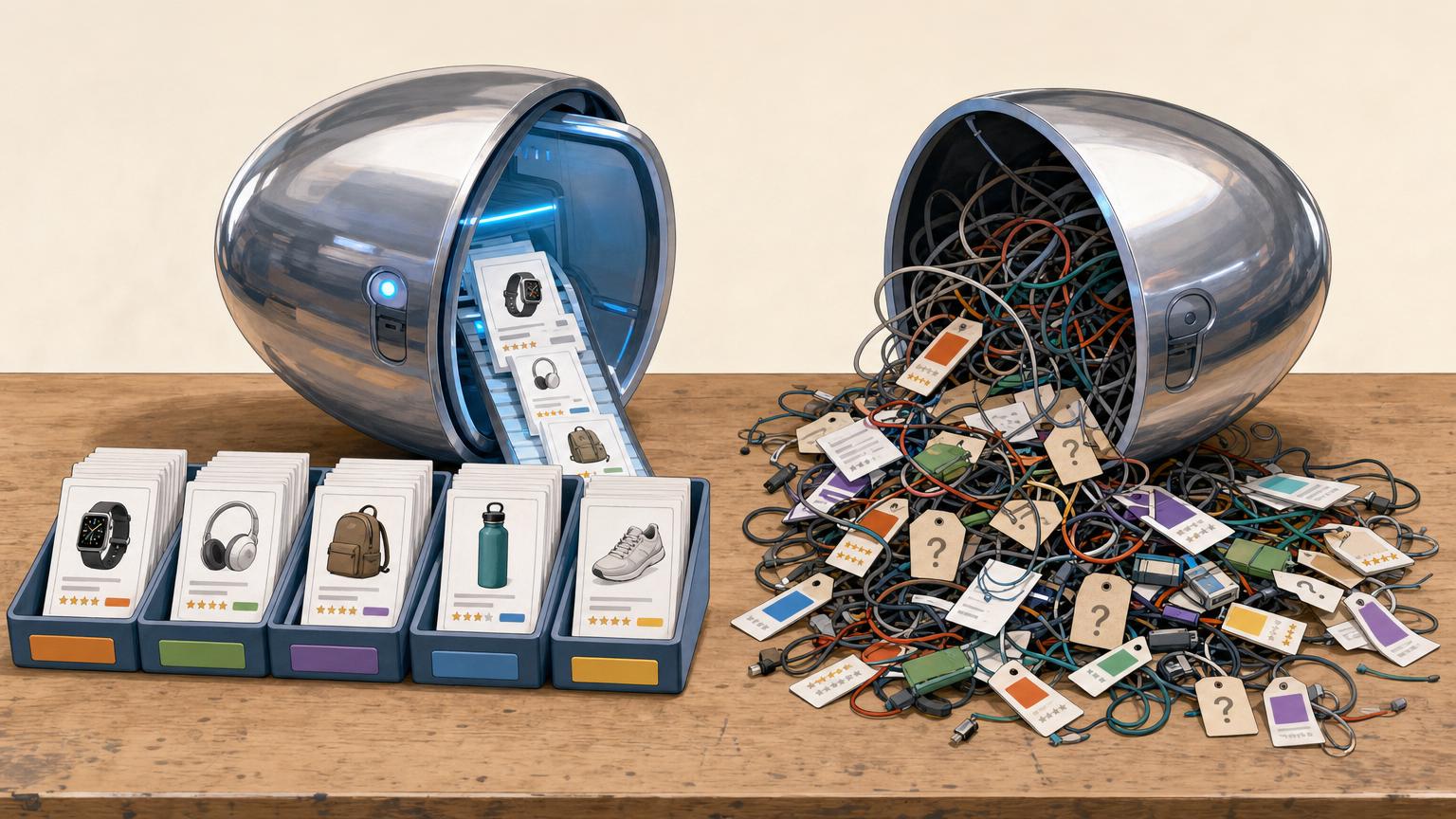

A polished verdict is not the same thing as firsthand evidence.
A review can describe a camera’s “comfortable grip” or a coffee grinder’s “quiet operation” so smoothly that it feels tested—even when those details came from product pages, other reviews, or a press demo. That is where readers get misled: not necessarily by a false fact, but by an implied experience that never happened.
A simple admission changes the relationship. Saying “this is based on published specifications and reported owner feedback, not extended use” gives the reader a fair way to weigh the claim. It may make the review sound less dramatic, but it makes its useful parts easier to trust. Borrowed information can still help compare features, prices, and common complaints; it should not be dressed up as personal testing.
- A short showroom try-out can support comments on size or controls, but not durability, battery life, or long-term reliability.
Research is useful, but it is not a test
The plain answer is yes—products can be covered responsibly without being used firsthand. Research can compare specifications, prices, manuals, warranty terms, owner reports, and reputable test results. It becomes misleading only when that desk research is written as though it came from personal use.
Labels help readers understand what kind of evidence supports a page:
- A guide explains a product type, key features, and how to choose.
- A comparison places products side by side using stated criteria, such as capacity, compatibility, or cost.
- A roundup presents several relevant options, usually with a short reason each may suit a different buyer.
- A buying guide focuses on decision factors and may recommend products, but should say whether recommendations are researched or tested.
A review carries the strongest expectation of direct experience: setup, handling, performance, quirks, and long-term use. If none of that happened, “reviewed” is the wrong claim. Clear wording—such as researched selection or specification-based comparison—keeps the promise aligned with the evidence.
What research can and cannot establish
A product page, manual, and reputable retailer can establish verifiable facts: dimensions, stated weight, materials, included accessories, warranty terms, compatibility, and price at a given time. These sources can also reveal a contradiction worth flagging, such as a claimed feature missing from the manual.
But a review often makes claims that need a person, a product, and repeated use. The useful distinction is simple: cite the source for facts; describe the test for experience. That is the evidence that deserves testing before a recommendation.
| Claim | Evidence that can support it |
|---|---|
| “It fits small hands comfortably.” | Use by people with smaller hands; measurements help, but do not settle comfort. |
| “Setup is straightforward.” | A first-time setup, noting unclear steps, extra tools, and failed attempts. |
| “The controls feel solid.” | Hands-on use across normal tasks; photos cannot convey force, wobble, or noise. |
| “Performance is consistent.” | Repeated trials under comparable conditions, not one successful run. |
| “It holds up over time.” | Weeks or months of use, plus a cautious reading of repair reports and warranty patterns. |
Desk research can narrow the questions. It cannot show whether a strap pinches after an hour, software loses settings after an update, or a hinge develops play. Even several customer reviews are signals rather than proof: usage, expectations, and defects vary. When direct testing is unavailable, the honest wording is “the manufacturer states” or “owners commonly report,” not a verdict dressed up as firsthand knowledge.
Build a trail readers can inspect
A defensible product account does not rely on one persuasive source. It records where each claim came from and gives different kinds of evidence the weight they deserve.
Use manuals, specification sheets, warranty terms, and support pages for dimensions, included parts, compatibility, and stated limits. These are confirmed claims from the manufacturer, not proof that a feature works well in everyday use.
Independent coverage can reveal launch changes, measured results, or missing context. Retailer listings help confirm current price, variants, and availability, but descriptions are often copied from marketing text; discrepancies should be named rather than silently resolved.
Sort reviews by use case, date, and recurring specifics such as fit, failures, or setup trouble. A cluster of detailed reports can support a cautious inference, while isolated complaints remain anecdotes. For using customer reviews fairly as supporting research, verified-purchase labels and photos add context, not certainty.
Label conclusions plainly: confirmed for documented facts, suggested for repeated reports, disputed when sources conflict, and unknown when evidence is thin.
A repeated claim is not automatically a fact
Attribute it: the maker advertises low noise; independent measurements or first-hand use are needed to describe actual noise.
Marketing language is a promise, not proof.
Check whether those reviews use identical wording, affiliate copy, supplied samples, or one original source.
Apparent agreement can be a chain of repetition.
Treat unusually broad praise as an opinion unless it names conditions, duration, and a specific result.
A useful report explains what happened and under which circumstances.
Put the caveat beside the claim
A disclosure buried at the end of a review does little for someone deciding whether to buy. The limit belongs next to the statement it qualifies—especially around fit, compatibility, ongoing cost, performance, and reliability.
For example, “The battery lasts all day” overstates what a specification or a few owner reports can show. A more honest version is: “The manufacturer rates it for 10 hours; owner reports suggest shorter runtime with high brightness and wireless use.” That tells readers both where the information came from and what remains unknown.
Match the conclusion to the evidence
- Documented: “The manual lists IPX7 water resistance.”
- Reported by owners: “Several long-term owners mention hinge loosening, though frequency is unclear.”
- Not tested directly: “Comfort and heat buildup could not be assessed firsthand.”
The recommendation must shrink with the evidence. A well-sourced comparison may support “worth considering for its listed features,” but not “the best choice” or “built to last.” Disclosure is not a permission slip for certainty; it is a boundary around the claim.
Make recommendations conditional
A product can be excellent for one person and a poor buy for another. Rather than declaring a winner, a review can state the conditions behind its recommendation: the intended use, the likely compromises, and what would change the conclusion.
For example, an inexpensive camera bag may suit a casual day trip, but not someone carrying heavy lenses daily. A keyboard that feels fine for short sessions may be a risky choice for professional all-day work. This is where a decision-focused review format helps: it turns observations into choices readers can recognize.
State who should act, and who should pause
- Good fit: people with the same budget, space, experience level, or light-duty needs as the use case described.
- Wait for more testing: buyers concerned about long-term durability, compatibility, heat, battery aging, or another unverified issue.
- Consider alternatives: owners whose existing gear already covers the main benefit, or professionals for whom downtime carries a real cost.
Fit and safety deserve special weight. Clothing, helmets, tools, and health-related products should not be broadly endorsed when sizing, protection, certification, or individual needs remain uncertain. Return windows, restocking fees, warranty coverage, and local support can also make a seemingly cheap option less appealing. The honest conclusion may be: worthwhile under these conditions, not a universal recommendation.
Raise the bar when mistakes matter
A casual comparison may be enough for a desk lamp. It is not enough for a helmet, child car seat, smoke alarm, mobility aid, medical device, or equipment relied on for work. In these categories, a poor recommendation can cost more than money.
Treat independent certification, current official guidance, and suitability for the specific situation as minimum evidence—not reassuring extras. Check the applicable regulator or standards body, since requirements vary by country and product. For example, a helmet’s stated CPSC or EN 1078 compliance is more meaningful than a reviewer calling it “protective,” but it still does not establish fit after a crash.
Avoid claiming that a product is safe, medically appropriate, accessible, or suitable for every user unless qualified evidence supports that conclusion. A hobbyist review can describe published specifications and ordinary use; it should direct readers to a clinician, licensed installer, safety authority, or manufacturer’s official instructions when selection or setup has serious consequences.
A polished review cannot verify correct installation, medical compatibility, or legal compliance. When failure could injure someone or block essential access, official instructions and qualified advice take priority.
Run a final reader-safety check
-
Read the title as a promise
A title should match the evidence. “Reviewed” suggests hands-on use; “compared,” “researched,” or “buyer’s guide” is more accurate when findings come from documents and outside reports.
-
Circle the strongest claims
For each claim about comfort, performance, durability, or safety, confirm what supports it. Soften anything based on specifications, one owner report, or a brand statement, and name the source where it matters.
-
Make missing evidence visible
State what was not tested, who may have a different experience, and which conditions could change the result. A short, plain gap is more useful than a confident-sounding conclusion.
-
End with a sensible next move
For size-sensitive products, point readers to measurements, fit tools, or an in-person trial. For medical, protective, electrical, or technical purchases, direct them to official guidance or a qualified professional.
-
Keep the exit route practical
Mention return windows, restocking fees, warranty limits, and reputable sellers when uncertainty remains. A recommendation is more responsible when readers can verify fit and change course without an expensive penalty.
A final pass should make the article easier to act on, not merely more cautious.
Let Evidence Set the Ceiling
A useful review does not sound certain simply because certainty sells. Its confidence should stop where the evidence stops: a hands-on observation can support a narrow practical claim; documented specifications can establish what a maker states; owner reports can flag a pattern worth checking. None becomes proof of more than it shows.
That restraint is not a weakness. It tells readers which details deserve trust, which need verification, and when a return policy, fit check, or expert advice matters more than a verdict. The same discipline underpins affiliate product reviews readers can trust: clear sourcing, visible uncertainty, and recommendations sized to the evidence. A modest, well-supported recommendation is more useful than an enthusiastic promise that later fails.











7 responses to “Can Products Be Reviewed Without Misleading Readers?”
Repeated praise is weirdly persuasive online. Ten articles saying a keyboard has “amazing feel” may just mean ten people copied the launch language. At minimum, writers should trace whether anyone actually describes how they used it.
Maybe a minor gripe: “real-world testing” can sound more rigorous than it really is too. One person using a product casually for a month is still limited evidence, even if they touched it. Direct use shouldn’t automatically become the gold standard.
The part about putting the caveat beside the claim is huge. I hate getting to the bottom of a glowing recommendation only to find a tiny “we did not test this” note after I’ve already mentally added it to my cart 🙃
There is a practical problem here: readers want a simple answer, and “it depends on your setup, risk tolerance, return policy, and local regulations” can feel evasive.
But I’d still take that over fake certainty. Maybe the answer is a quick conditional summary at the top, followed by the evidence trail for people who want to inspect it.
That is a good format. A concise takeaway can be useful if it carries the important condition with it—for example, “a strong option for X, provided Y”—rather than pretending every reader has the same needs.
Right. “It depends” is annoying only when the writer stops there. Explain what it depends on and people can actually decide.
Well put. The goal is not to offload the work onto readers; it is to make the decision variables visible and explain which ones are likely to matter most.